



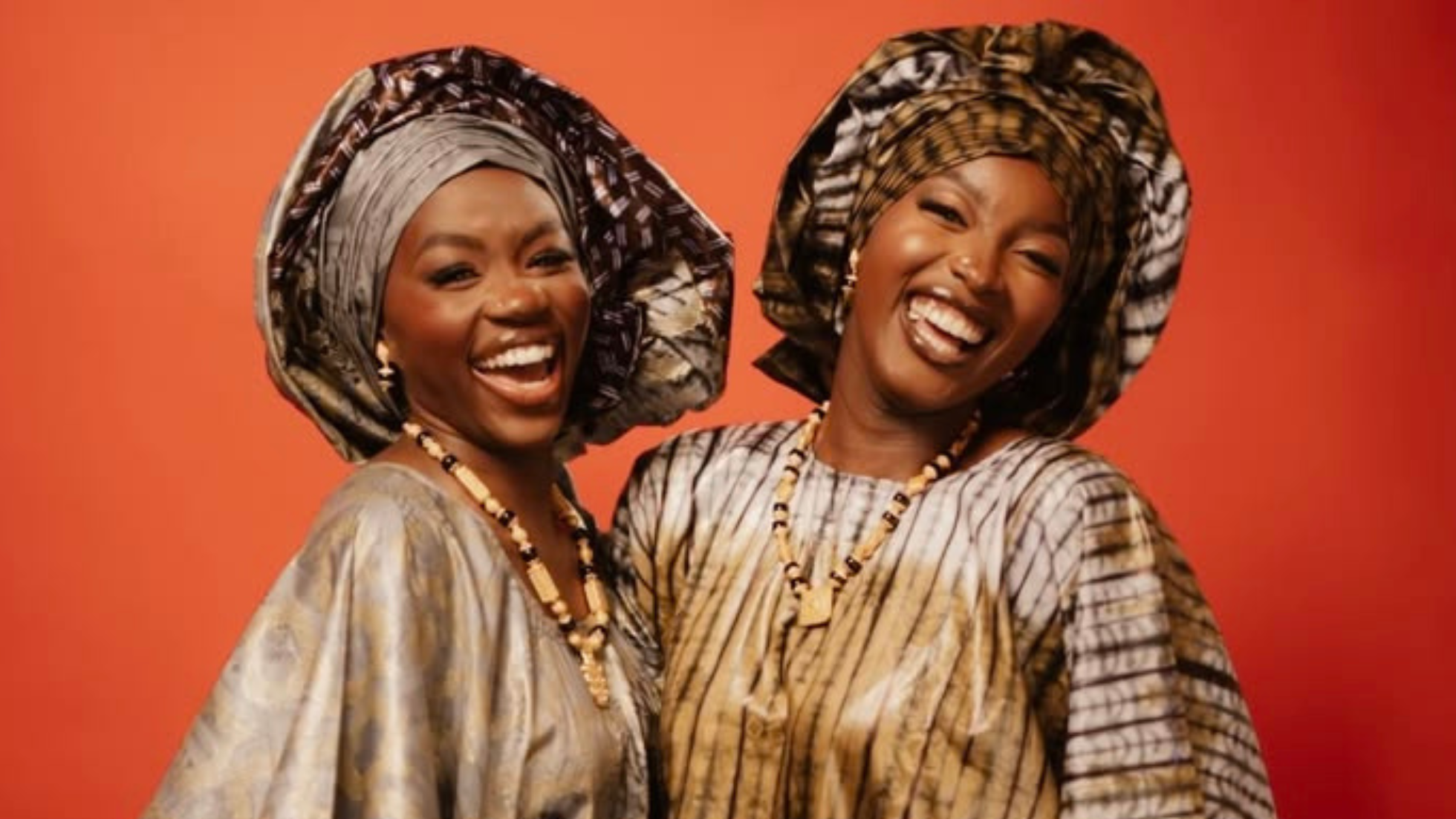
Why I Wear a Headwrap — and What It Has Always Meant
My earliest memory of tying my hair has nothing to do with ceremony.
It was bedtime. I was trying to figure out how to wrap my head so the cloth would still be there in the morning — not too tight, not covering my whole face, firmly enough to stay put while I slept. It took several attempts. Nobody was watching. It was just me, a piece of fabric, and the quiet determination to get it right.
That is where it started for me. And I think it is the most honest place to begin this story.
A Practical Beginning
Afro hair takes time. A lot of it. Styling, maintaining, protecting — it is a whole practice in itself. The headwrap solves that on ordinary days. You cover your hair, protect it, and get on with your life without spending an hour in front of the mirror first. My mother taught me this version first — the home wrap, the bedtime wrap. I cannot go to bed without one now. It is second nature. It is my safe space.
In Krio — the language of Sierra Leone — the headwrap is called Ɛnkincha. And it has always been more than a square of cloth. In Sierra Leone, when a woman takes fabric to a tailor to have an outfit made — a lappa and top, a dress, a skirt — a piece of that same fabric is set aside for the Ɛnkincha. The headwrap and the outfit are one thing together. That is how I first came to know it. Not as an accessory. As part of something whole.
How I Wear Mine
There are four versions, if I am honest.
The bedtime wrap — purely practical, keeping my hair in place through the night. The home wrap — simple, comfortable, for days when I want my hair covered and out of the way without fuss. The celebration wrap — elaborate, grand, often requiring another woman's hands to get right. And the modern wrap — my own interpretation, worn with both West African and contemporary clothing. The place where my two worlds meet.
The Fabrics
I choose by colour and pattern first — does it work with what I am wearing?
The wax cotton prints are versatile and easy to work with. The Gara — Sierra Leone's tie-dye fabric, made using a technique the town of Makeni is known for — feels completely different. It is starched, so when you work with it, it has a crisp, structured quality under your hands. It holds its shape. It asks something more of you when you tie it.
And the handwoven Kontri Kloth, made by weavers in Sierra Leone from locally grown cotton, is also used for special occasions. It rarely comes alone — it is always part of a traditional outfit. When I wear it, it feels deliberate. It feels like a statement.
What It Feels Like in Sydney
When I wear a headwrap at our Stòrí of Africa markets and pop-up events, I feel like myself. Not a version of myself adjusted for the room. A headwrap is not a cultural costume. It is an everyday practice that can be as simple or as elaborate as the day asks for.
When I tie my hair, I am doing something women have done before me for generations. A simple act of care. A quiet continuity. This is what self-care has always looked like — long before it became a category.
 photo credit: Pinterest


