



What Is the Difference and Which One Is Right for Your Skin?
Pick up a handful of raw, unrefined shea butter and you will know immediately that this is something different.
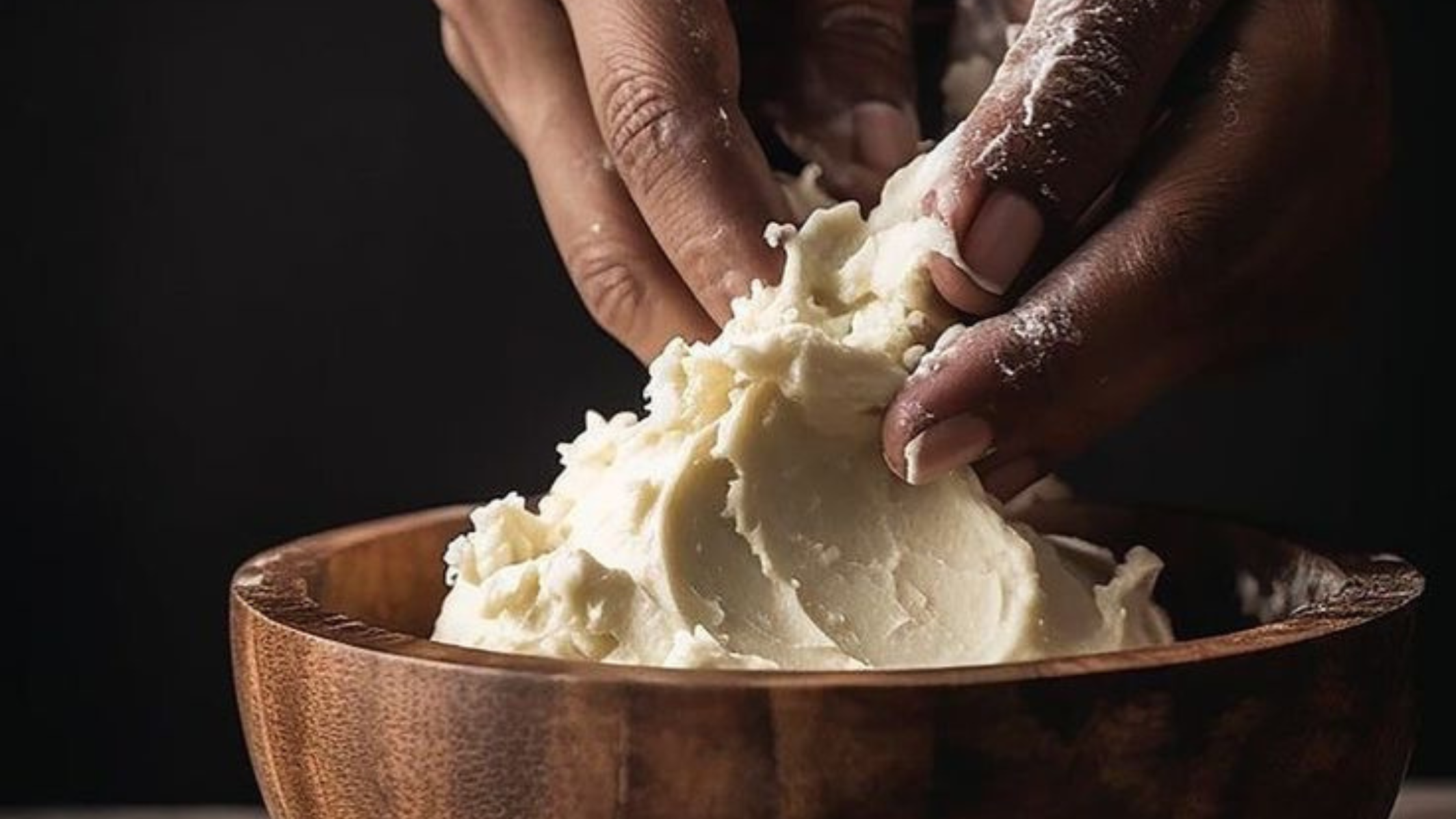
The colour catches you first — a deep cream, beige, or yellow that has never come from a dye. Then the smell — earthy, nutty, distinctive. It looks solid, almost sculptural. In West Africa, it is piled high into calabash bowls like a pyramid and it holds its shape. Touch it, and it begins to melt gently into your palm. The more you work it, the softer it becomes — a thick, rich oil that spreads easily and leaves a slight, satisfying graininess on the skin.
This is shea butter as it has existed for centuries. Made by women, using skills passed from generation to generation. Using it connects you to that tradition.
Refined shea butter is something else. The colour has been processed to a clean white. The distinctive smell has been removed. The texture is smooth, consistent, and predictable. It still melts beautifully into the skin — but as one of our customers once put it, the story is missing.
What Does Refining Actually Remove?
The refining process strips shea butter of its natural odour and colour — but it also reduces components such as cinnamic acid, the compound responsible for shea butter's anti-inflammatory properties(Akihisa et al, 2010). Studies have shown that unrefined shea butter contains higher levels of this beneficial compound than its refined counterpart.
Refining also raises the flashpoint of shea butter — meaning it becomes more heat-stable. This makes refined shea butter more predictable and easier to work with in high-heat cosmetics manufacturing. It also has a longer shelf life and a less grainy texture.
Importantly, the primary emollients in shea butter — oleic and stearic acids — remain largely intact after refining. This means refined shea butter is still an excellent moisturiser. The core skin-softening function is preserved, even if some of the deeper healing properties are reduced.
Which One Is Right for Your Skin?
For very dry skin, eczema-prone skin, or anyone who wants the full benefit of shea butter's healing properties — unrefined is the stronger choice. In West Africa, unrefined shea butter has traditionally been used to massage newborn babies, which speaks to both its potency and its gentleness.
For normal to dry skin — refined shea butter is a good option. The neutral odour, makes it great for cosmetic formulations, especially those that fragrance will be added to.
At Stori of Africa, we use both — deliberately.
Our Ori Pure Unrefined Shea Butter and handcrafted soaps use unrefined shea butter, made by the same women's collective in Ghana using traditional methods. When you use Ori, you are using shea butter exactly as it has been made and used for generations.
Our Shea Balm uses refined shea butter — a decision made for a very specific reason. The balm was originally formulated for a family member with eczema who did not like the smell of shea butter. Refined shea butter, with its neutral scent and predictable formulation, was the safest and most effective choice. The combination of refined shea butter combined with nutrient rich baobab, marula, moringa and ximenia oils delivers high performance antioxidants and essential fatty acids to soothe dryness and revel a healthy, natural glow.
Both products begin with shea butter sourced from the same women in Ghana. The ingredient is the same. The form is different — because different skin needs different things.

How to Tell Which Type Is in a Product
When buying a shea butter product, look for these signs of unrefined:
-
The label states unrefined or raw shea butter
-
The colour is beige, cream, or yellow — not pure white
-
There is a noticeable earthy or nutty aroma
-
The texture has a very slight graininess when touched
In a formulated product like a balm or body butter, it is harder to tell — the other ingredients change the appearance and smell. In these cases, the brand's transparency about their sourcing and formulation process is your best guide.
At Stòrí of Africa, shea butter is the foundation of everything we make — in both its forms, for all the different skin types.
Shop Ori Pure Unrefined Shea Butter and the Shea Balm.
Photo credit: Pinterest
References
Akihisa et al. (2010). Anti-Inflammatory and Chemopreventive Effects of Triterpene Cinnamates and Acetates from Shea Fat. Journal of Oleo Science, 59(6), 273–280.
Akihisa et al. (2011). Triacylglycerol and triterpene ester composition of shea nuts from seven African countries. Journal of Oleo Science, 60(8), 385–391.
Cosmetics and Toiletries (2015). Shea Butter Extract for Bioactive Skin Care


