



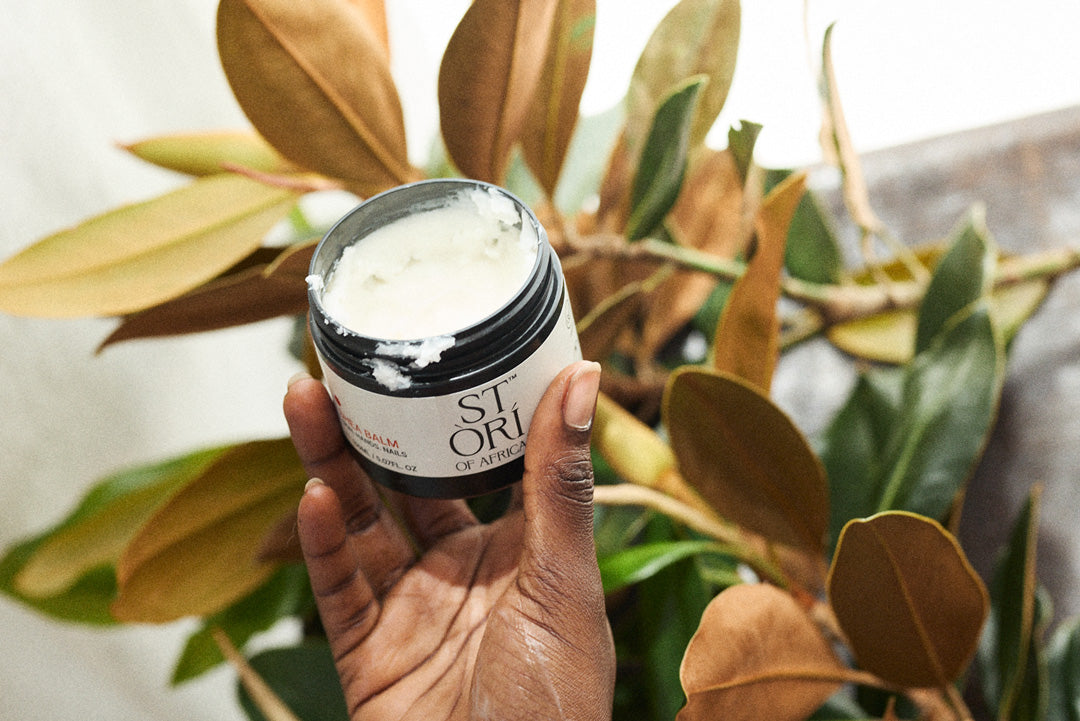
Nature’s Gift to Skin and Community
Shea butter is a plant butter extracted from the nuts of the African shea tree. For generations, it has been used across West Africa in daily self-care rituals and passed from one generation to the next. At Stòrí of Africa, shea butter connects skincare with heritage, craftsmanship and the women who continue to make it today.
.

What is Shea Butter?
Shea butter comes from the nuts of the shea tree (Vitellaria paradoxa), which grows across the African shea belt stretching from West to East Africa. Once the nuts are harvested and processed, they produce a rich butter that has long been valued in skincare, haircare and body care traditions.
Today, shea butter is found in everything from body balms and soaps to luxury skincare products around the world. Yet its story begins far from manufacturing plants and cosmetic laboratories. It begins in villages, communities and families where the knowledge of making shea butter has been carefully preserved and shared.
As a moisturising ingredient, shea butter is prized for its rich fatty acid profile and its ability to leave skin feeling soft, nourished and comfortable. Learn more in our guides on Shea Butter for Dry Skin and Refined vs Unrefined Shea Butter.
How Shea Butter is Made
Making traditional shea butter is a labour-intensive process that can take several days.
First, fallen shea fruits are collected and the nuts are removed, washed and dried. The nuts are then cracked, roasted and ground into a paste. Water is added and the mixture is worked by hand until the oils separate and rise to the surface.
The butter is then collected, filtered and cooled into the rich, creamy ingredient recognised around the world today.
This process has been refined over generations. It requires patience, skill and experience. Every batch reflects the knowledge of the women who make it.
The Women Behind Shea Butter
Across West Africa, shea butter production has traditionally been led by women.
For many communities, shea butter is more than an ingredient. It is a craft, a source of income and a form of cultural knowledge passed from one generation to the next. The techniques used today are often the same techniques taught by mothers, grandmothers and elders decades earlier.
At Stòrí of Africa, our shea butter is sourced from a women's collective in Ghana. While the world often focuses on the finished product, we believe the people behind it deserve equal recognition.
Every jar of shea butter carries with it stories of skill, resilience and tradition.
More Than An Ingredient
The growing popularity of shea butter has introduced millions of people to one of Africa's most celebrated natural ingredients. But its significance extends beyond skincare.
Shea butter represents a connection between people and place. It reflects the knowledge embedded within African self-care traditions and the value of ingredients that have been trusted for generations.
At Stòrí of Africa, this is why shea butter sits at the heart of our collection. Not simply because it is an effective moisturising ingredient, but because it reflects our mission to celebrate, preserve and share African self-care traditions.
Why Shea Butter Matters to Stòrí of Africa
The story of Stòrí of Africa begins with a desire to share the beauty, wisdom and traditions of Africa through everyday rituals.
Shea butter was the natural place to start.
Whether it appears in our Ori Pure Unrefined Shea Butter, our Shea Balm, or our handcrafted soaps, every product begins with the same belief: that skincare is about more than what we put on our skin. It is also about the stories, traditions and people behind the ingredients we use.
When you use shea butter, you are participating in a tradition that stretches across generations and across continents.
The Story Continues
Today, shea butter is used around the world. Yet its story remains deeply rooted in Africa.
From the shea tree to the hands that transform its nuts into butter, every stage reflects generations of knowledge and care. It is a story of craft, culture and continuity.
A story worth preserving.
And a story we are proud to share.


